The prescription retinoid the experts call the gold standard. What it does for acne and ageing skin, why it needs a prescription, how to get through the first few weeks, and what 28 skincare experts said about it on camera.
Tretinoin has a big reputation. People hear it called the retinoid all the others get measured against, and then the questions pile up. Do you need a prescription? Which strength? What is the purge, and how long does the peeling last? And is it really that much stronger than the retinol on the shop shelf?
The short answer is reassuring. The experts we follow rate it highly, and their reservations are nearly all about living with it rather than about results. The fans point to decades of research on wrinkles, dark spots and acne.
Tretinoin's Guru Score is 93%, from 130 mentions by 28 skincare experts, among them dermatologists, a cosmetic chemist and some of the best-known skincare creators. The mixed takes are about the dryness, peeling and irritation that come with it, and about who should not use it at all, including anyone who is pregnant or trying to be. It is a prescription medicine, so the strength, and whether it suits you, is a conversation for a doctor. Below, what the experts said sits right next to what the studies and the drug labels say, so you can see where the two line up.
The quick answer
Tretinoin is a prescription retinoid medicine used to treat acne and to soften the fine wrinkles and dark spots of sun-damaged skin. The experts we track rate it highly, and their warnings are about irritation, patience and pregnancy. It is retinoic acid itself, the active form that retinol has to be converted into, which makes it stronger and more irritating [12]. Trials found real improvement in wrinkles and pigmentation over months to two years [6, 9], and US acne guidelines strongly recommend topical retinoids [5]. It needs a prescription in the US and UK, and it should not be used in pregnancy [2, 3].
Before you buy
Before you start tretinoin
A prescription made for youTretinoin is prescription only in the US and the UK [1, 3]. Only use tretinoin that has been prescribed for you.
A lower strength to beginIn a 48 week trial, 0.025% improved sun damage about as well as 0.1%, with less redness and scaling [8].
A slow, night-time startThe label says once a day before bed, and the AAD suggests every other night at first [1, 15]. Wear sunscreen every morning [1, 2].
Not in pregnancyIts labels say not to use it in pregnancy, and the UK label adds when planning one or breastfeeding [2, 3].
Tretinoin at a glance
Question
What we found
What is it used for?
Acne, plus the fine wrinkles, dark spots and rough texture of sun-damaged skin [1, 2].
Do skincare experts recommend it?
Yes, warmly. Their warnings are about irritation, patience and pregnancy.
Most often 0.025%, 0.05% and 0.1% creams, with gels at 0.01% and 0.025% [1].
How long until it works?
For acne, more than six weeks for clear results [1]. For signs of ageing, trials ran from 16 weeks to two years [6, 9].
Morning or night?
Night. The label says to apply it before bed, and light breaks tretinoin down [1, 14].
Is it safe in pregnancy?
No. Its labels say it should not be used in pregnancy [2, 3].
Tretinoin for skin: what does it do?
Tretinoin is retinoic acid, the form of vitamin A that actually switches on the retinoid effects in skin. Retinol and retinaldehyde, the versions sold over the counter, only work once your skin has converted them into it [12]. Tretinoin skips that step, which is why it is stronger, and also why it irritates more [12, 16].
It is approved for acne, and topical retinoids are a standard acne treatment [1, 5]. It also helps skin damaged by years of sun: in trials it softened fine wrinkles, lightened dark spots and helped rebuild collagen in the deeper layer of the skin [6, 7, 9].
Because it is a medicine, not a cosmetic, you need a prescription for it in the US and the UK [1, 3].
The short versionTretinoin is the active retinoid itself, with no conversion needed. That makes it the strongest and best-studied option, and the one most likely to irritate.
What do skincare experts say about tretinoin?
Here is what each of them said on camera, with a link to the moment they said it.
Points to decades of trials, including a two-year study of daily 0.05% tretinoin that was both safe and effective on sun damage.
Multiple clinical studies have shown that topical tretinoin improves the visible signs of skin aging including fine lines, uneven pigmentation, and rough skin texture. One particularly important study followed patients for 2 years who were using 0.05% tretinoin once a day. That study showed that long-term use of topical 0.05% tretinoin daily was not only safe, but was effective for improving the visible signs of moderate to severe sun damage.Watch ▸
Notes that most of what we know about retinoids comes from tretinoin, for acne, pigment and wrinkles alike.
Most of the evidence we have on retinoids are based on tretinoin, so we know that it works for all the standard retinoid things like acne, pigment, and wrinkles [...] You can get concentrations between 0.025 and 0.1% and it's compounded a lot so you can control the percent there too.Watch ▸
Started tretinoin at 25 and says acne takes 2 to 3 months, pigment and collagen at least 4 to 6.
I started on Tretinoin 0.05% at age 25 and I'm just happy I did start at that time because when you stay with a retinoid you can get a lot of its benefits. It doesn't happen just overnight. It takes about 2 to 3 months of using consistently a retinoid to help with your acne, and if you want to work on hyperpigmentation and collagen, 4 to 6 months at least of consistent use every night or every other night to get benefits.Watch ▸
Calls it the espresso shot of retinoids: it works, but it can make you peel and burn, so it suits experienced skin.
This stuff can make you peel, this stuff can make you burn, this stuff can make your face feel like it's falling off, but it also works really freaking well [...] This is for seasoned skin intellectuals.Watch ▸
After a decade of on-off irritation and flare-ups, she has given tretinoin up for good.
I'm breaking up with tretinoin [...] and I'm never going back. [...] I've been in a roller coaster relationship with tretinoin for over a decade and at this point I've decided we are too toxic for each other.Watch ▸
Key takeawayThe experts rate tretinoin above any other topical for ageing skin, and their warnings are about irritation, patience and pregnancy.
Where do the experts agree?
The experts are warm on tretinoin, so the caveats are where the useful detail sits.
Where they agree
It has more research behind it than any other topical for ageing skin.
Start low and slow: a pea-sized amount, a few nights a week at first.
It is a long game. Results take months, not days.
Use it at night, and wear sunscreen every morning.
The caveats
Dryness, peeling and redness are common in the first few weeks [1].
Higher strengths irritate more without clearly working better [8].
It is a prescription medicine in the US and UK [1, 3].
Not for pregnancy or while trying to conceive [2, 3].
What does the research say about tretinoin?
For ageing skin, the evidence goes back decades. In a 16 week double-blind trial, 14 of 15 people who used tretinoin on the face improved, against none of 15 on the plain base cream [6]. In a two-year trial in 204 people, 0.05% tretinoin cream used daily improved fine and coarse wrinkles, blotchy pigmentation, age spots and sallowness more than the plain cream, and biopsies showed no worrying changes in skin cells [9].
It also works below the surface. In sun-damaged skin treated for 10 to 12 months, 0.1% tretinoin raised the formation of new collagen by 80%, while it fell by 14% with the plain cream [7]. In a 40 week trial in Chinese and Japanese adults, sun-related dark spots got lighter in 90% of people using 0.1% tretinoin, against 33% on the plain cream [10].
Stronger is not always better. A 48 week trial compared 0.1% and 0.025% tretinoin and found both improved sun damage to a similar degree, but the 0.1% caused noticeably more redness and scaling [8].
For acne, the American Academy of Dermatology's 2024 guidelines give topical retinoids a strong recommendation [5]. Tretinoin is not the gentlest choice, though: across five trials in 900 people, adapalene 0.1% gel cleared acne about as well as tretinoin 0.025% gel and was better tolerated [11].
The thing to rememberStrong, long-term evidence for wrinkles, sun spots and acne. Lower strengths can do much of the work with less irritation, and results take months.
Does tretinoin need a prescription?
Yes. In the US, tretinoin is a prescription medicine approved for acne, and a separate tretinoin cream is approved to help soften fine facial wrinkles alongside sun protection [1, 2]. In the UK it is prescription only too: the NHS lists it among the acne creams and gels a GP or specialist can prescribe [4], and a licensed tretinoin and clindamycin acne gel carries a prescription-only label [3].
Which strength?
The common US strengths are 0.025%, 0.05% and 0.1% creams, and 0.01% and 0.025% gels [1]. The strength is your prescriber's call. In the trial that compared them, 0.025% did about as well as 0.1% on sun damage with less irritation [8], and Dr Dray says many dermatologists start patients low and build up as their skin allows.
Cream or gel?
Dr. Aleksandra Brown, a dermatologist, points people with drier skin to the cream and keeps the gel, which has more alcohol, for oilier skin. DermNet notes that creams are the least irritating base [16].
Where to get it
A GP or a dermatologist can prescribe it, and some of the experts we track describe getting theirs through online prescription services. Whichever route you take, it is a medicine: the person prescribing it should ask about pregnancy plans, sensitive skin and anything else you use on your face. Only use tretinoin that has been prescribed for you.
If you remember one thingTretinoin is a prescription medicine in the US and UK. A prescriber picks the strength and base, and a lower strength is a sensible place to start.
Tretinoin vs retinol, adapalene and tazarotene
Several of our experts compare tretinoin with the rest of the retinoid family. Here is how the evidence stacks up.
Tretinoin vs retinol
Retinol is the over-the-counter cousin. Your skin has to convert it into retinoic acid first, and one review puts it at about 20 times less potent than tretinoin [12]. It is also considerably less irritating [12]. If tretinoin is too much for your skin, our retinol guide covers the gentler route.
Tretinoin vs adapalene
Adapalene is the other retinoid best known for acne. Across five trials, adapalene 0.1% gel matched tretinoin 0.025% gel for clearing acne, worked a little faster and irritated less [11]. DermNet calls adapalene the least irritating topical retinoid and tretinoin the most [16]. Adapalene is also steadier next to benzoyl peroxide (see below) [13]. For signs of ageing, the long-term trials in this guide are tretinoin trials [7, 9].
Tretinoin vs tazarotene
Tazarotene is another prescription retinoid, and two of our experts made whole videos weighing the two. Dr Dray's advice is not to pick on strength, but on which one you can keep using for months and years, because that is where the benefit comes from. Our tazarotene guide has the detail.
Worth knowingTretinoin has long-term trials behind it for ageing skin. Retinol and adapalene are gentler, and adapalene does about as well for acne.
How do you start tretinoin?
Follow your prescriber's instructions first. The US label says to apply it once a day before bed, and warns that putting on more will not make it work faster but can irritate your skin [1]. The American Academy of Dermatology suggests starting every other night and building up slowly [15].
How much
A small amount. Dr. Daniel Sugai and Dr. Aleksandra Brown, both dermatologists, describe a pea-sized amount for the whole face, and Dr. Brown applies it to completely dry skin.
The first few weeks
Early dryness, peeling and redness are common. The Retin-A patient leaflet says these reactions do not happen to everyone and usually settle within two to four weeks [1]. If your skin becomes very red, swollen, blistered or crusted, the label says to stop or adjust the dose [1], so speak to your prescriber.
The "purge"
For acne, the label warns that spots can seem to get worse in the early weeks. It puts this down to tretinoin bringing up deeper spots that had not yet surfaced, and says that alone is not a reason to stop [1]. Its patient leaflet says some people notice new spots at three to six weeks [1]. If things are not improving after that, check back with your prescriber.
Sun, and darker skin tones
Tretinoin makes skin more prone to sunburn, so wear sunscreen and cover up by day, and do not use it on sunburnt skin [1, 2]. The UK label asks for SPF 30 or higher and no sunbeds [3]. On darker skin, irritation itself can leave dark marks, so the AAD advises starting slowly and using moisturiser [15].
Pregnancy and breastfeeding
Do not use tretinoin if you are pregnant or trying to become pregnant. The US label for tretinoin cream says it should not be used during pregnancy [2], and the UK label lists pregnancy and planning a pregnancy as reasons not to use it, asks for contraception during treatment and for a month after, and says not to use it while breastfeeding [3]. If you used it before you knew you were pregnant, a review of studies found no clear rise in birth defects or miscarriage after topical retinoids, though not enough data to make using them in pregnancy safe [17]. Speak to your doctor or midwife.
The short versionNight only, a pea-sized amount, every other night to begin with, and sunscreen every morning. Expect a rough few weeks, and give it months.
What can you use tretinoin with?
Tretinoin already asks a lot of your skin, so the main rule is to avoid stacking it with other irritants and to add one new product at a time.
Tretinoin and benzoyl peroxide
Keep them apart. In a lab test, benzoyl peroxide plus light broke down more than half the tretinoin in about 2 hours and 95% within 24 hours, while adapalene stayed stable [13]. If you use both, ask your prescriber how to split them, for example benzoyl peroxide in the morning and tretinoin at night.
Tretinoin with AHAs, BHAs and scrubs
Go carefully. The label advises caution with peeling agents such as salicylic acid, with medicated or abrasive cleansers, and with products high in alcohol [1]. 208SkinDoc, a dermatologist, says not to use tretinoin at the same time as an exfoliating acid such as mandelic acid.
Tretinoin and moisturiser
A plain moisturiser helps with the dryness, and the AAD suggests one to keep irritation down [15]. Doctorly suggests a retinoid sandwich, with moisturiser before and after, for anyone starting out.
Tretinoin and azelaic acid
Doctorly endorses this pairing for acne and dark spots. We found no trial of the two used together, so add azelaic acid only once your skin has settled on tretinoin.
Which tretinoin products do the gurus rate?
A high score for the ingredient does not carry over to every product that contains it. Strength, base and formula all change the verdict. These are the highest-scoring tretinoin products at least three experts have rated, ranked by Guru Score. Like any tretinoin, they need a prescription.
Tretinoin treats acne and softens the signs of sun damage. In trials it improved fine and coarse wrinkles, blotchy pigmentation and age spots, and raised the formation of new collagen [6, 7, 9]. US acne guidelines strongly recommend topical retinoids like it [5].
02
Is tretinoin prescription only?
Yes, in both the US and the UK. In the US it is a prescription medicine for acne, with a separate tretinoin cream approved for fine wrinkles [1, 2]. In the UK the NHS lists it among the prescription acne treatments from a GP or specialist, and it carries a prescription-only label [3, 4]. Only use tretinoin prescribed for you.
03
What strength of tretinoin should I start with?
That is your prescriber's call, but lower is a sensible start. The usual strengths are 0.025%, 0.05% and 0.1% creams, and 0.01% and 0.025% gels [1]. In a 48 week trial, 0.025% improved sun damage about as well as 0.1% and caused less redness and scaling [8].
04
How long does tretinoin take to work?
Months. For acne, the label says results may show after two to three weeks, but more than six weeks may be needed for clear benefit [1]. For signs of ageing, trials judged results at 16 weeks to two years [6, 9]. Dr. Daniel Sugai puts acne at 2 to 3 months and dark spots and collagen at 4 to 6 months or more.
05
Is the tretinoin purge real?
For acne, yes, in a sense. The label warns that spots may seem to get worse in the early weeks, as tretinoin brings up deeper spots that had not surfaced yet, and says that alone is not a reason to stop [1]. The patient leaflet mentions new spots at three to six weeks [1]. If things are not improving after that, see your prescriber.
06
Can you use tretinoin every night?
Many people build up to it, but not straight away. The label describes once daily use at bedtime [1], while the AAD suggests starting every other night and building up slowly [15]. Some people stay at a few nights a week because their skin prefers it, which still counts as consistent use.
07
Does tretinoin make you sensitive to the sun?
Yes. Its labels warn of a higher risk of sunburn and advise sunscreen, protective clothing and less time in the sun, and not to use it on sunburnt skin [1, 2]. The UK label asks for SPF 30 or higher and no sunbeds [3]. Light also breaks tretinoin down, which is one more reason to apply it at night [14].
08
Is tretinoin safe during pregnancy?
No. The US label for tretinoin cream says it should not be used during pregnancy, and the UK label rules it out in pregnancy, when planning a pregnancy and while breastfeeding [2, 3]. If you used it before you knew, a review found no clear rise in birth defects after topical retinoids, but not enough data to call them safe [17]. Ask your doctor or midwife.
09
Tretinoin vs retinol: what is the difference?
Tretinoin is retinoic acid, a prescription medicine. Retinol is an over-the-counter ingredient your skin must convert into retinoic acid first, so it is gentler and weaker: one review puts it at about 20 times less potent [12]. Retinol is also considerably less irritating [12]. Tretinoin has trials of up to two years behind it for wrinkles and pigmentation [9].
10
Tretinoin vs adapalene: which is better for acne?
They do a similar job on acne. Across five trials in 900 people, adapalene 0.1% gel cleared acne about as well as tretinoin 0.025% gel, worked a little faster and was better tolerated [11]. DermNet calls adapalene the least irritating topical retinoid and tretinoin the most [16]. For signs of ageing, tretinoin has two-year trial data behind it [9].
11
Can you use tretinoin with benzoyl peroxide?
Not at the same time. In a lab test, benzoyl peroxide plus light broke down more than half the tretinoin in about 2 hours and 95% within 24 hours, while adapalene stayed stable [13]. Ask your prescriber how to split them, for example benzoyl peroxide in the morning and tretinoin at night.
12
Can you use tretinoin with AHAs or BHAs?
Go carefully. The label advises caution with peeling agents such as salicylic acid and with harsh or alcohol-heavy products [1], because the irritation adds up. If you use an acid, keep it to a different night or the morning, and only once your skin has settled on tretinoin.
13
Do dermatologists recommend tretinoin?
The dermatologists we feature do, with caveats. Dr Dray and Dr. Daniel Sugai point to the decades of research and the need for patience, while Doctorly flags pregnancy and irritation as the downsides. Across the 28 experts we track, the reservations are about tolerance rather than results.
The experts behind the score
28 experts, 130 mentions, every one traced to a video you can watch. Sponsored takes are excluded.
Treclin 1%/0.025% w/w Gel (clindamycin and tretinoin): Summary of Product Characteristics. Electronic Medicines Compendium, revised February 2026. medicines.org.uk/emc/product/5371/smpc
Reynolds RV et al. Guidelines of care for the management of acne vulgaris. Journal of the American Academy of Dermatology, 2024. pubmed.ncbi.nlm.nih.gov/38300170/
Weiss JS et al. Topical tretinoin improves photoaged skin. A double-blind vehicle-controlled study. JAMA, 1988. pubmed.ncbi.nlm.nih.gov/3336176/
Griffiths CE et al. Restoration of collagen formation in photodamaged human skin by tretinoin (retinoic acid). New England Journal of Medicine, 1993. pubmed.ncbi.nlm.nih.gov/8336752/
Griffiths CE et al. Two concentrations of topical tretinoin (retinoic acid) cause similar improvement of photoaging but different degrees of irritation. Archives of Dermatology, 1995. pubmed.ncbi.nlm.nih.gov/7544967/
Kang S et al. Long-term efficacy and safety of tretinoin emollient cream 0.05% in the treatment of photodamaged facial skin: a two-year, randomized, placebo-controlled trial. American Journal of Clinical Dermatology, 2005. pubmed.ncbi.nlm.nih.gov/16060712/
Griffiths CE et al. Topical tretinoin (retinoic acid) treatment of hyperpigmented lesions associated with photoaging in Chinese and Japanese patients: a vehicle-controlled trial. Journal of the American Academy of Dermatology, 1994. pubmed.ncbi.nlm.nih.gov/8277035/
Cunliffe WJ, Poncet M, Loesche C, Verschoore M. A comparison of the efficacy and tolerability of adapalene 0.1% gel versus tretinoin 0.025% gel in patients with acne vulgaris: a meta-analysis of five randomized trials. British Journal of Dermatology, 1998. pubmed.ncbi.nlm.nih.gov/9990421/
Mukherjee S, Date A, Patravale V, Korting HC, Roeder A, Weindl G. Retinoids in the treatment of skin aging: an overview of clinical efficacy and safety. Clinical Interventions in Aging, 2006. pmc.ncbi.nlm.nih.gov/articles/PMC2699641/
Martin B, Meunier C, Montels D, Watts O. Chemical stability of adapalene and tretinoin when combined with benzoyl peroxide in presence and in absence of visible light and ultraviolet radiation. British Journal of Dermatology, 1998. pubmed.ncbi.nlm.nih.gov/9990414/
Tashtoush BM, Jacobson EL, Jacobson MK. UVA is the major contributor to the photodegradation of tretinoin and isotretinoin: implications for development of improved pharmaceutical formulations. International Journal of Pharmaceutics, 2008. pubmed.ncbi.nlm.nih.gov/18093761/
Kaplan YC et al. Pregnancy outcomes following first-trimester exposure to topical retinoids: a systematic review and meta-analysis. British Journal of Dermatology, 2015. pubmed.ncbi.nlm.nih.gov/26215715/
How this guide was made
This guide combines two kinds of information. The expert consensus comes from 130 mentions of tretinoin by 28 skincare experts in their YouTube videos. Each one was read, given a Yay, Mixed or Nay verdict and linked to the moment it was said. Sponsored takes are excluded. The research sections summarise published studies, drug labels and medical sources, listed in full above.
The Guru Score measures how warmly the experts talk about tretinoin. It is not a measure of clinical effectiveness, and this guide is not medical advice. Tretinoin is a prescription medicine, so talk to a doctor before you start. It has not been reviewed by a doctor.
This guide is general information, not medical advice. The Guru Score reflects how warmly the experts we track talk about tretinoin; it is not a measure of clinical efficacy. Speak to a dermatologist or doctor about a diagnosed skin condition, and before using any medicine.









 Doctor Youn
 Dr. Aanchal MD
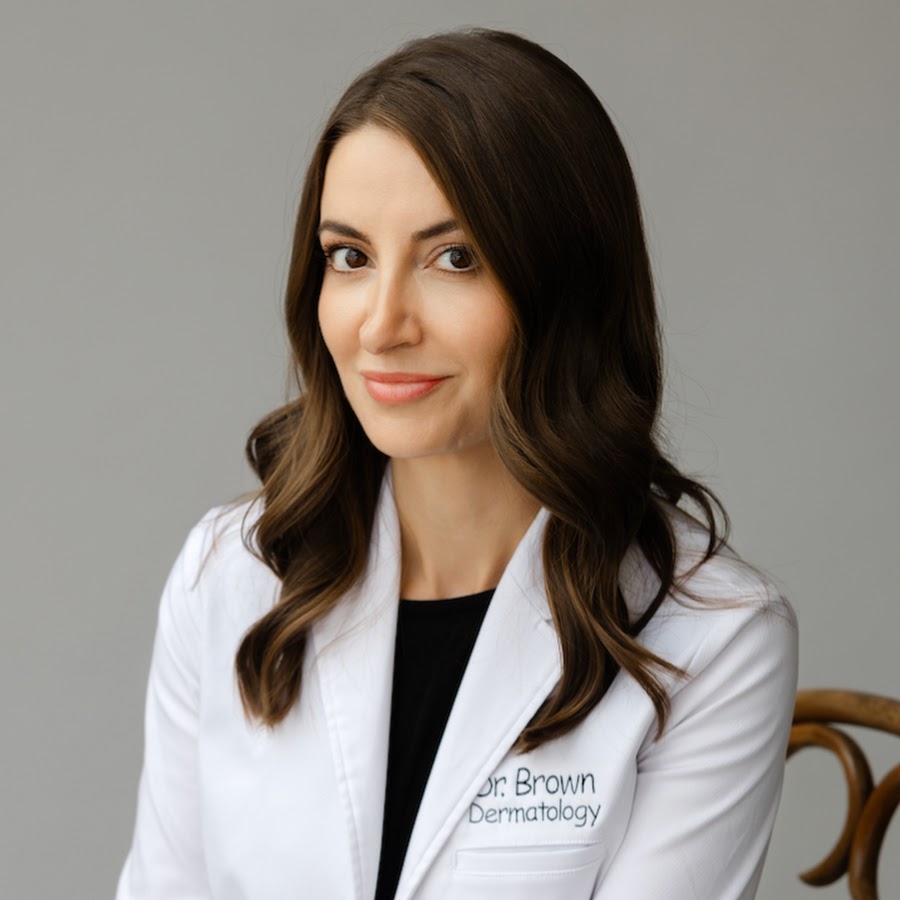 Dr. Aleksandra Brown
 Dr. Jenny Liu
 Dr. Mamina
 Dr. Sam Ellis
 Dr. Shereene Idriss
 Dr. Somji Skin
 HotandFlashy
 Hyram
 Kelly Driscoll
 Mad About Skin
 Nipun Kapur
 No BS Beauty
 Sincerely Miss Ash
 Skin Obsessed Mary
 The Budget Dermatologist
 The Style and Beauty Doctor